

Yogi elaborated that the PFB operates as a fund management scheme to collect, accumulate, and distribute special disaster funds. This proactive approach is designed to protect the APBN from disaster-related financial pressures by investing in fund accumulation and transferring risks through insurance mechanisms. The PFB’s funding sources may include international donors via grants and trust funds. “The PFB is one of the elements of PARB and is key to orchestrating the various instruments within the disaster funding ecosystem,” she stated.
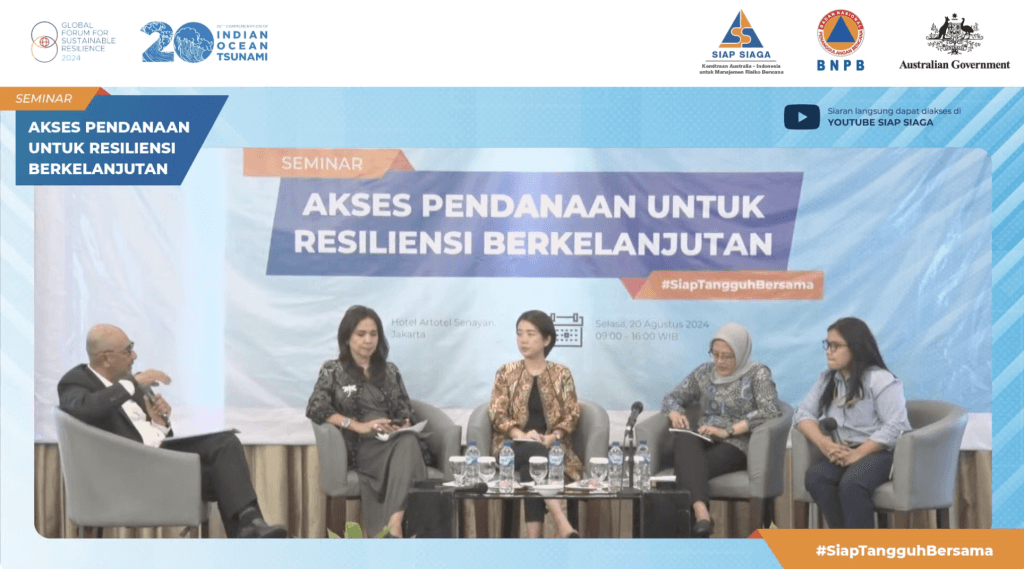
Efforts to ensure sustainable resilience require significant financial support, making it essential to utilise funding sources beyond the State Budget (APBN). Innovative breakthroughs are needed to effectively integrate various funding potentials, ensuring they are used optimally.
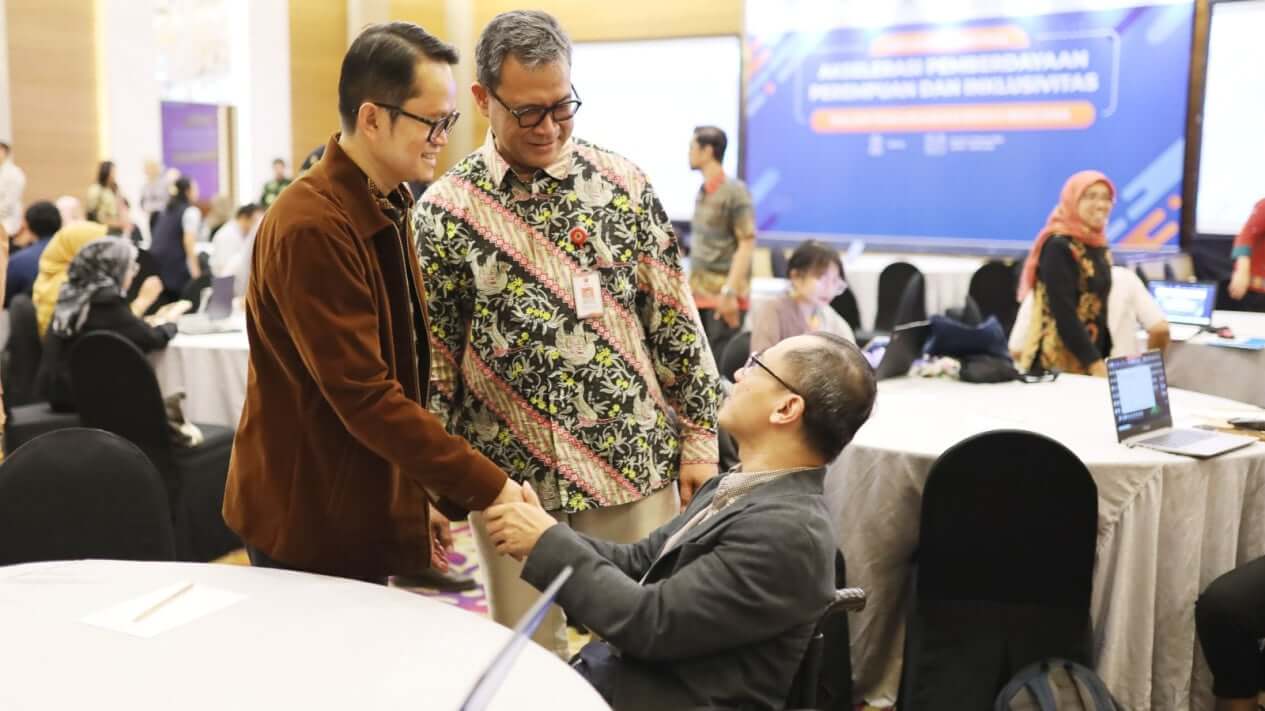
This was highlighted during the seminar “Access to Funding for Sustainable Resilience”, held on 20 August 2024 at the Artotel Senayan Hotel in Jakarta. This seminar was the fourth in a series related to sustainable resilience, organised by the National Disaster Management Agency (BNPB) with support from the SIAP SIAGA Program.
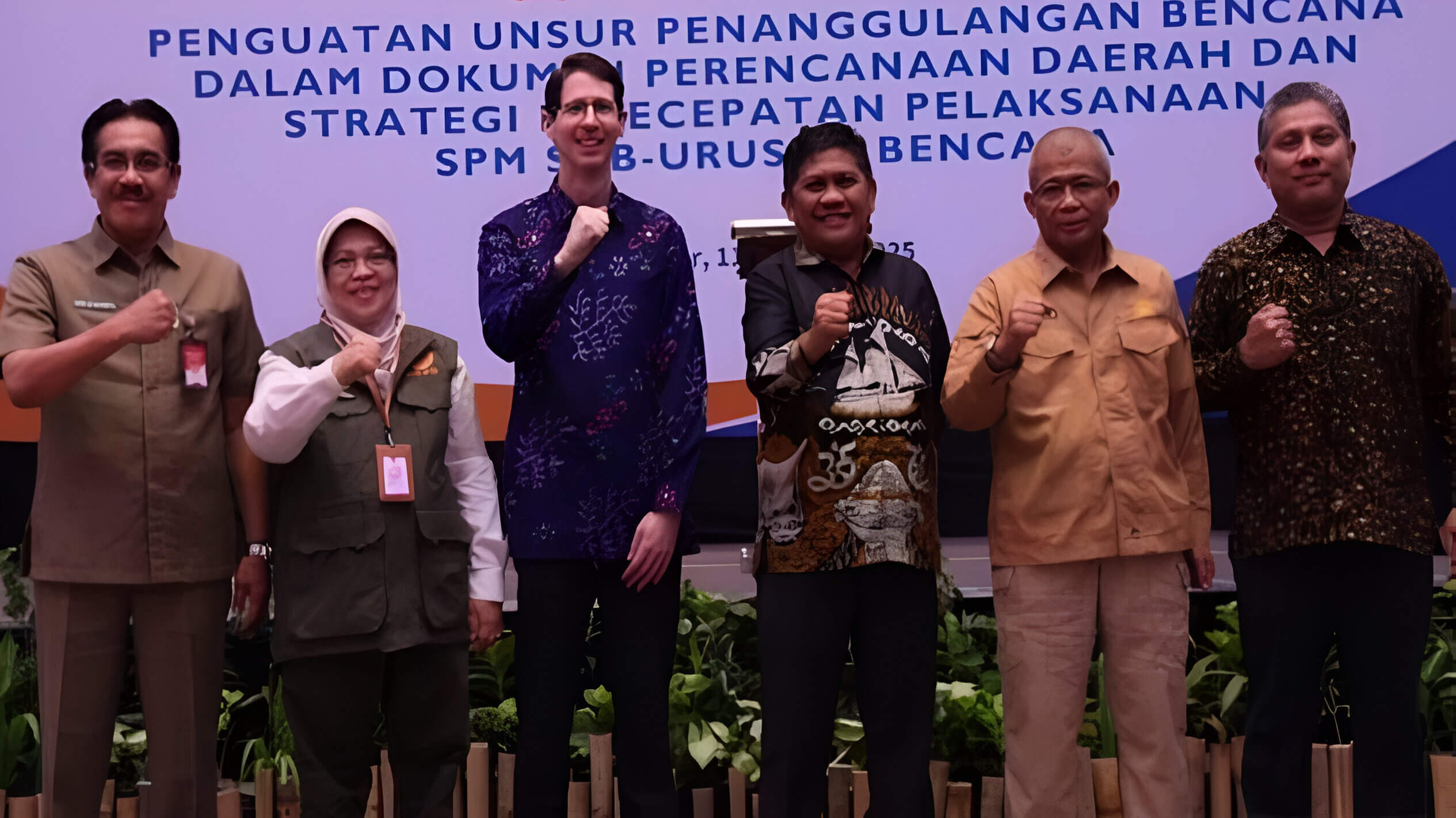
The keynote speaker at the seminar was Yogi Rahmayanti, the Head of the Center for Regional and Bilateral Policy, Fiscal Policy Agency. Opening remarks were delivered by Deputy for System and Strategy of BNPB, Raditya Jati; First Secretary of the Department of Foreign Affairs & Trade of the Australian Embassy, Catherine Meehan; and SIAP SIAGA Program Team Leader, Lucy Dickinson. During the presentation session, speakers included the Secretary of the Directorate of Social Protection and Security at the Ministry of Social Affairs, Beni Sujanto, and the Director of Sectoral and Regional Resource Mobilisation at the Directorate General of Climate Change Control, Ministry of Environment and Forestry, Wahyu Marjaka.
SIAP SIAGA Program Team Leader, Lucy Dickinson emphasised the seminar’s focus on funding mechanisms that are both innovative and inclusive. “This discussion is a unique opportunity for several parties, such as scientists, policymakers, and financial institutions, to collaborate,” she said.
The First Secretary of the Department of Foreign Affairs & Trade of the Australian Embassy, Catherine Meehan, also highlighted the importance of collaboration in building sustainable resilience. According to her, financial access is a critical aspect of resilience-building. “It is important to support vulnerable communities, for example, MSMEs (Micro, Small and Medium Enterprises), to strengthen economic resilience so they can survive disasters and recover afterwards,” she stated.
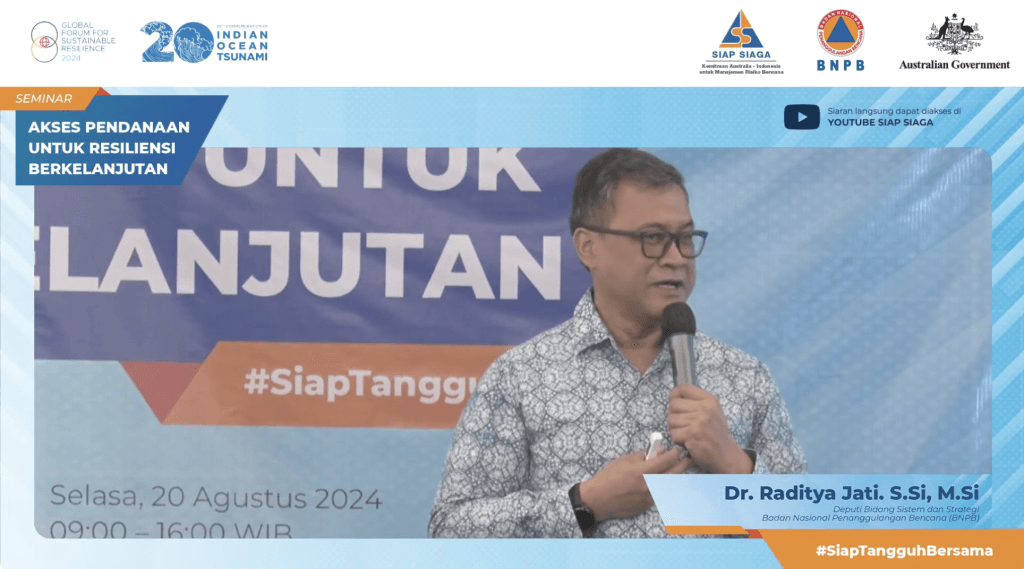
In his opening remarks, the Deputy for System and Strategy of BNPB, Raditya Jati, stressed the need for forward-thinking and systemic discussions to address increasing disaster risks. He noted that disasters pose systemic risks to the nation’s economy. For example, post-tsunami restoration costs in Aceh soared from IDR 78 trillion to IDR 113 trillion. Raditya also referred to a statement by Finance Minister Sri Mulyani, highlighting that Indonesia needs a budget of more than IDR 22 trillion annually for disaster management. Based on the ideal Disaster Risk Reduction (DRR) investment level, this figure should equate to 0.3% of Indonesia’s Gross Domestic Product (GDP), or approximately IDR 67 trillion annually.
Joint Disaster Fund
The Head of the Center for Regional and Bilateral Policy, Fiscal Policy Agency, Yogi Rahmayanti, explained that disaster management funding cannot rely solely on the APBN. The Disaster Risk Financing and Insurance (PARB) strategy is essential, with the Disaster Pooling Fund (PFB) being one of the key instruments.
Yogi elaborated that the PFB operates as a fund management scheme to collect, accumulate, and distribute special disaster funds. This proactive approach is designed to protect the APBN from disaster-related financial pressures by investing in fund accumulation and transferring risks through insurance mechanisms. The PFB’s funding sources may include international donors via grants and trust funds. “The PFB is one of the elements of PARB and is key to orchestrating the various instruments within the disaster funding ecosystem,” she stated.
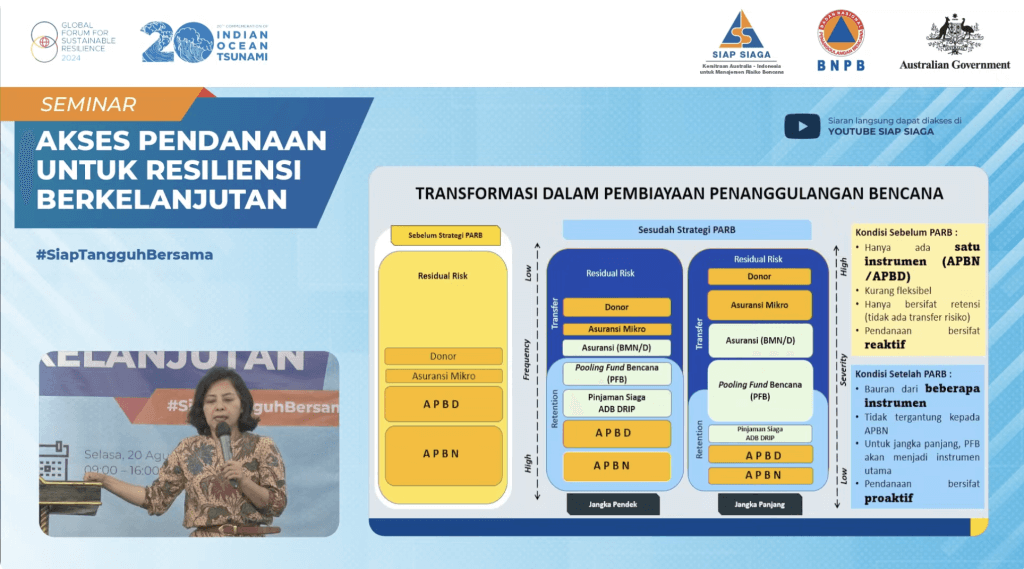
The necessity for budget synergy across Ministries and Institutions (K/L) was echoed by Secretary of the Directorate of Social Protection and Security at the Ministry of Social Affairs, Beni Sujanto. He noted that the Ministry’s budget is insufficient to address disaster risks. “We maintain buffer stocks in several warehouses to meet immediate disaster needs, such as food, clothing, and protection, to anticipate future disasters. However, these resources are still inadequate for handling multiple or long-term disasters,” he said.
The Ministry of Environment and Forestry (KLHK) has also developed a specialised disaster funding mechanism. Director of Sectoral and Regional Resource Mobilisation at the Directorate General of Climate Change Control, Wahyu Marjaka, explained that the KLHK established the Environmental Fund Management Agency (BPDLH) to finance climate resilience. This initiative addresses the gap in disaster funding, as the APBN currently covers only 34% of the required climate change control budget. The BPDLH systematically manages environmental protection funds sourced from domestic and international public and private sectors, including bilateral support, international institutions, private entities, and philanthropic organisations.
Various approaches
In addition to keynote addresses, the seminar featured a panel discussion titled “Bridging the Gap: Innovative Solutions to Increase Resilience in Vulnerable Communities.” Panellists included Disaster Analyst at the Directorate of Disaster Risk Mapping and Evaluation of BNPB, Franta Evelin; Head of Impact Investment at the Indonesian Startup Venture Capital Association (Amvesindo), Devyta Wijaya; Division Head of Social Entrepreneurship and Incubation at Bank Rakyat Indonesia (BRI), Evi Sulistyowati; and Senior Financial Sector Specialist, Team Leader for Finance, Competitiveness, and Innovation at the World Bank Indonesia, Dara Lengkong.
Franta Evelin highlighted the ongoing challenges of integrating disaster management regulations and climate change adaptation policies. “The lack of alignment affects planning, discussions, and financing integration,” he explained.
Devyta Wijaya noted the untapped potential of private sector funding for disaster management. “In Indonesia, most of our investments focus on waste recycling and air quality measurement. However, opportunities remain vast, especially for AI-based climate risk intelligence solutions. Unfortunately, innovative technology-based solutions have not yet garnered much interest from developers or investors,” she stated.
Regarding the resilience of vulnerable communities, Evi Sulistyowati from BRI emphasised that the bank has shifted its focus from purely economic value to the social value of MSMEs. “Empowerment remains our priority, encouraging MSMEs to recover quickly after disasters. Research indicates that many empowerment activities are unsustainable, limiting their impact on MSME resilience,” she observed.
Senior Financial Sector Specialist at the World Bank Indonesia, Dara Lengkong, addressed the importance of tailored funding strategies in disaster management. She stressed that funding priorities must balance immediate needs and long-term recovery efforts. “No single solution fits all countries. The World Bank facilitates risk transfer to private insurance companies through regional risk pooling initiatives in areas like the Caribbean, Africa, and the Pacific Islands. Collaboration with private entities is a promising funding solution for sustainable resilience,” she said.
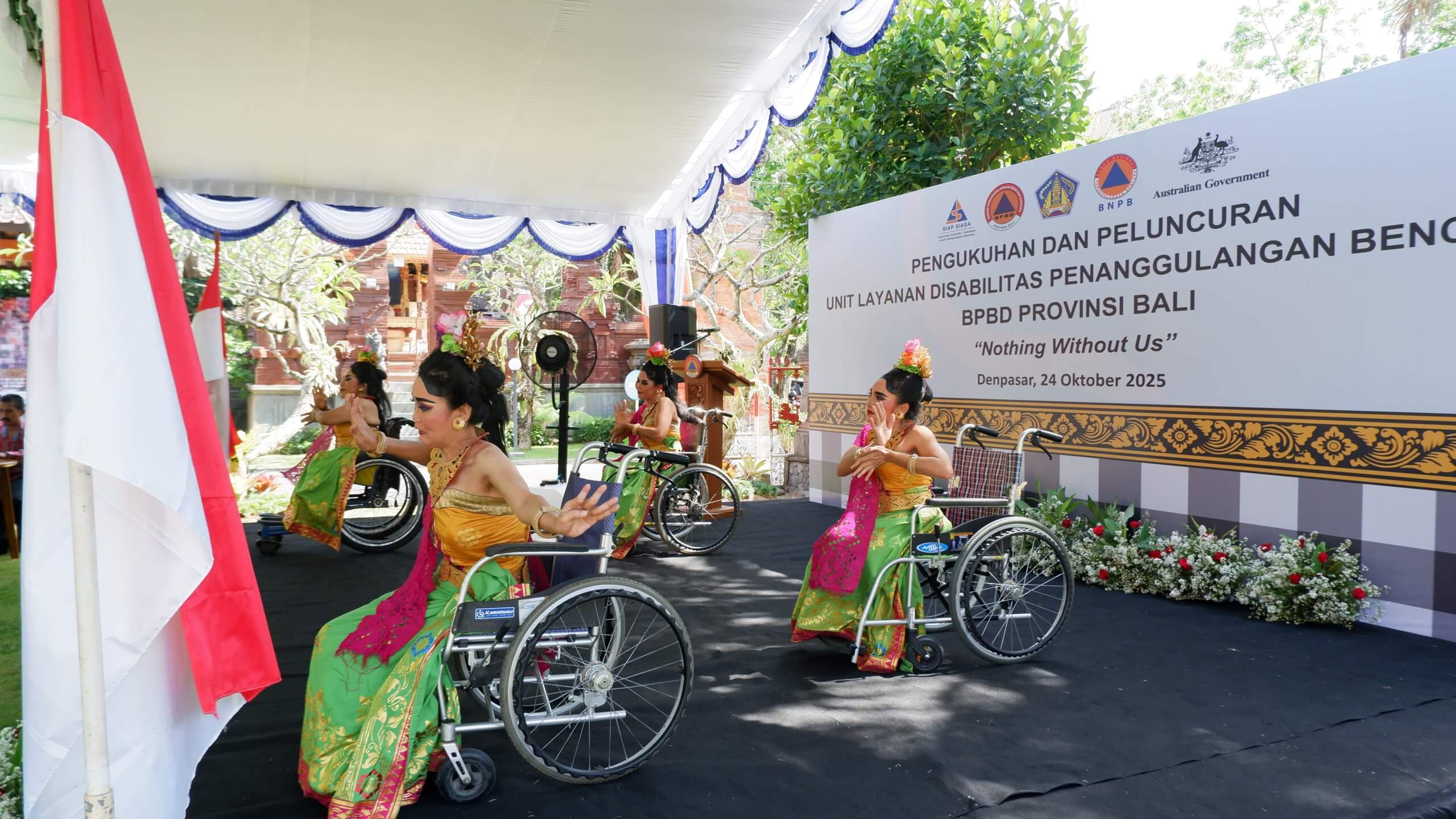



The SIAP SIAGA Program is the Australia-Indonesia Partnership on Disaster Risk Management which aims to strengthen disaster resilience in Indonesia and the Indo-Pacific Region
CONTACT US
We would love to hear from you.
Feel free to reach out using the below details.
Address:
SIAP SIAGA
Treasury Tower 59th Floor, District 8 SCBD Lot 28, Jl. Jend. Sudirman Kav 52 – 53
Jakarta Selatan, 12190, Indonesia
Phone: +6221 7206616
Email: siap.siaga@thepalladiumgroup.com